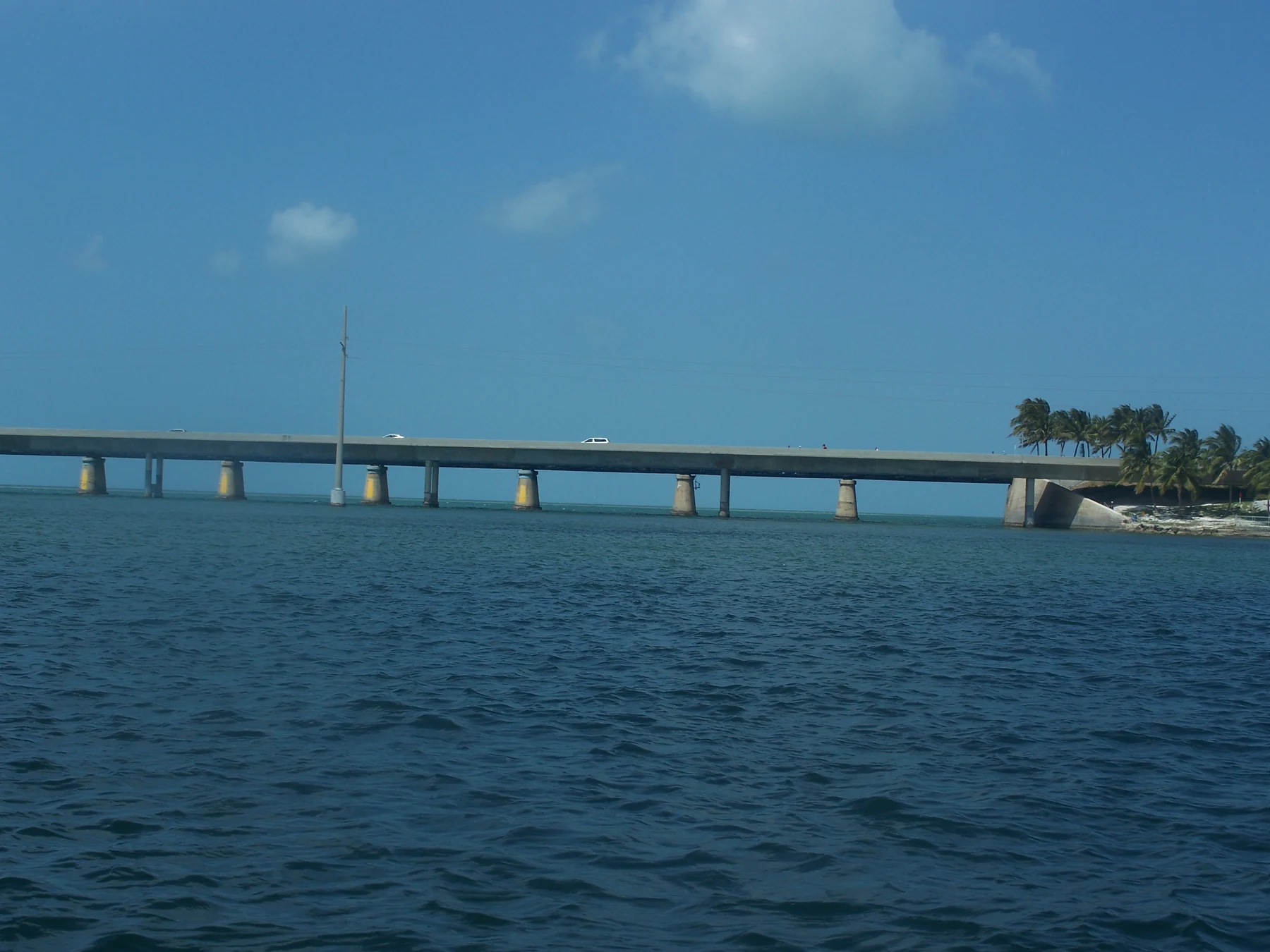

A place with a working past
Pigeon Key served as a base for workers building Henry Flagler's Key West Extension of the Florida East Coast Railway. The island's buildings and museum preserve part of that early twentieth-century railroad story. Seeing it from the bridge is worthwhile; visiting it helps connect the engineering visible over the water with the people who lived and worked here.
The restored Marathon-side section of Old Seven reaches the island after approximately 2.2 miles. Visitors can approach on foot or bicycle, while the Pigeon Key Foundation also operates a tram-style passenger service. The bridge path and admission to the historic island are different things: confirm tickets, tour availability and departures directly with the Pigeon Key Foundation.
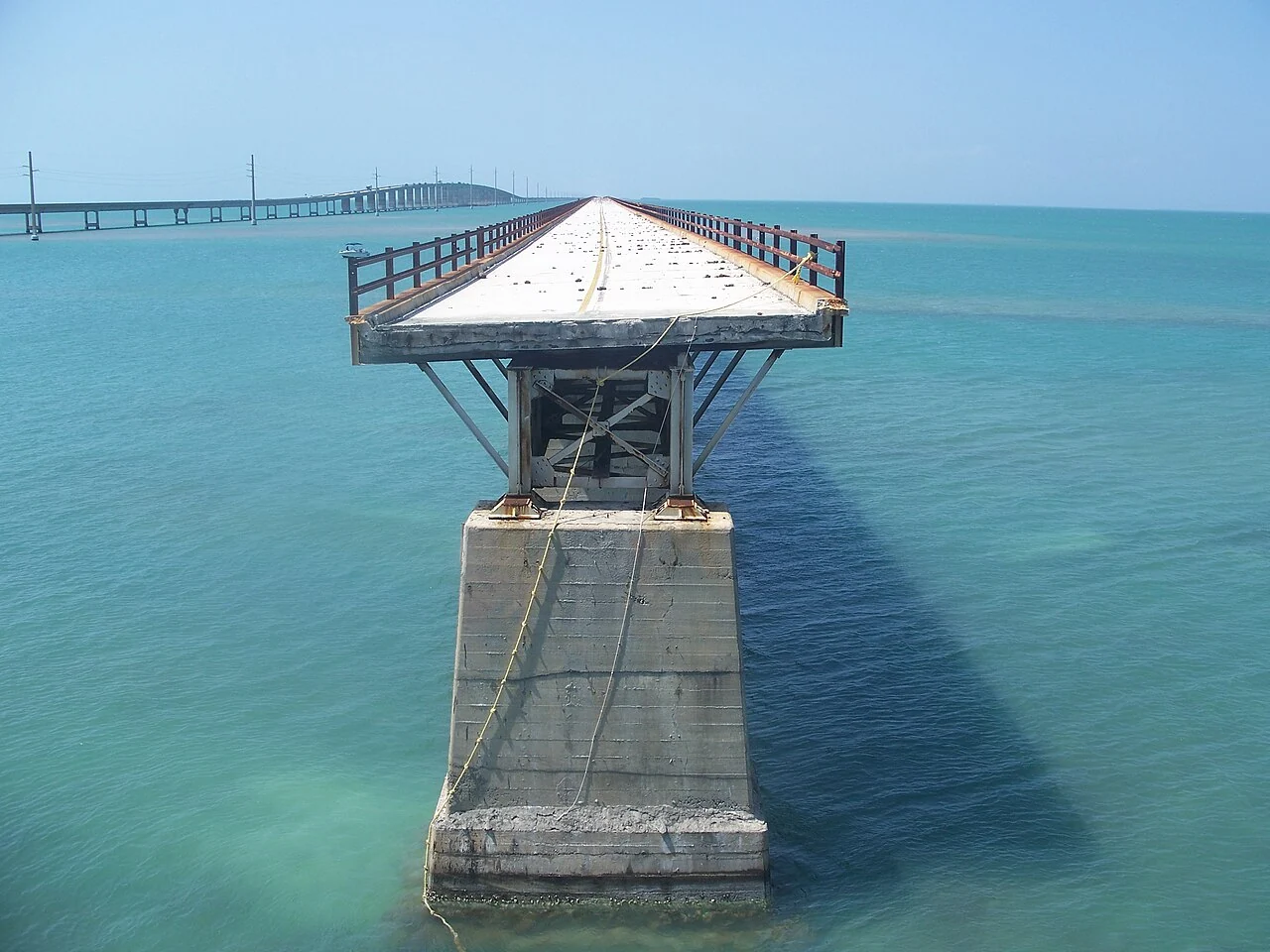

Do not rely on an assumed return ride
If you walk out, plan to walk back unless you have confirmed an alternative with the operator. Timetables, capacity and weather can change. The island is small, and its historic buildings are the main reason to go; leave space in your schedule to explore rather than treating it as a quick photograph at the end of a hot walk.
Visitors who prefer a shorter exertion may choose the operator's tram service, subject to current arrangements. Bring sun protection for the exposed bridge regardless of how you arrive. For the bridge itself, see our Old Seven guide; for parking and the highway approach, see Location & access. The Florida Keys tourism description provides an additional overview, but the operator is the source for live booking details.
Compare admission with the journey that comes with it
As checked on 26 September 2026, the operator's guided tours page lists train admission at $30 for adults aged 13 and over and $25 for children aged 4–12. Walking or cycling admission is listed at $15 and $12 respectively. Discounts and conditions are published by the operator. These are reference prices, not a quotation or booking offer from this independent guide; check the live booking page for your date.
The same page lists outward train departures at 10:00, 11:30, 13:00 and 14:30. The visitor centre is at 1090 Overseas Highway in Marathon, and check-in is requested ten minutes before departure. Older tourism descriptions can show a different number of daily departures. For the actual booking decision, use the operator's current schedule and confirmation.
Choose between the options by considering the whole outing. Walking reduces the transport component but adds the exposed outward and return distances. The train makes the island more practical for visitors who do not want that walk, but it introduces a timetable. Ask about the return departure and how much time it leaves for the activities you want. Do not assume you can change transport halfway through without checking availability.
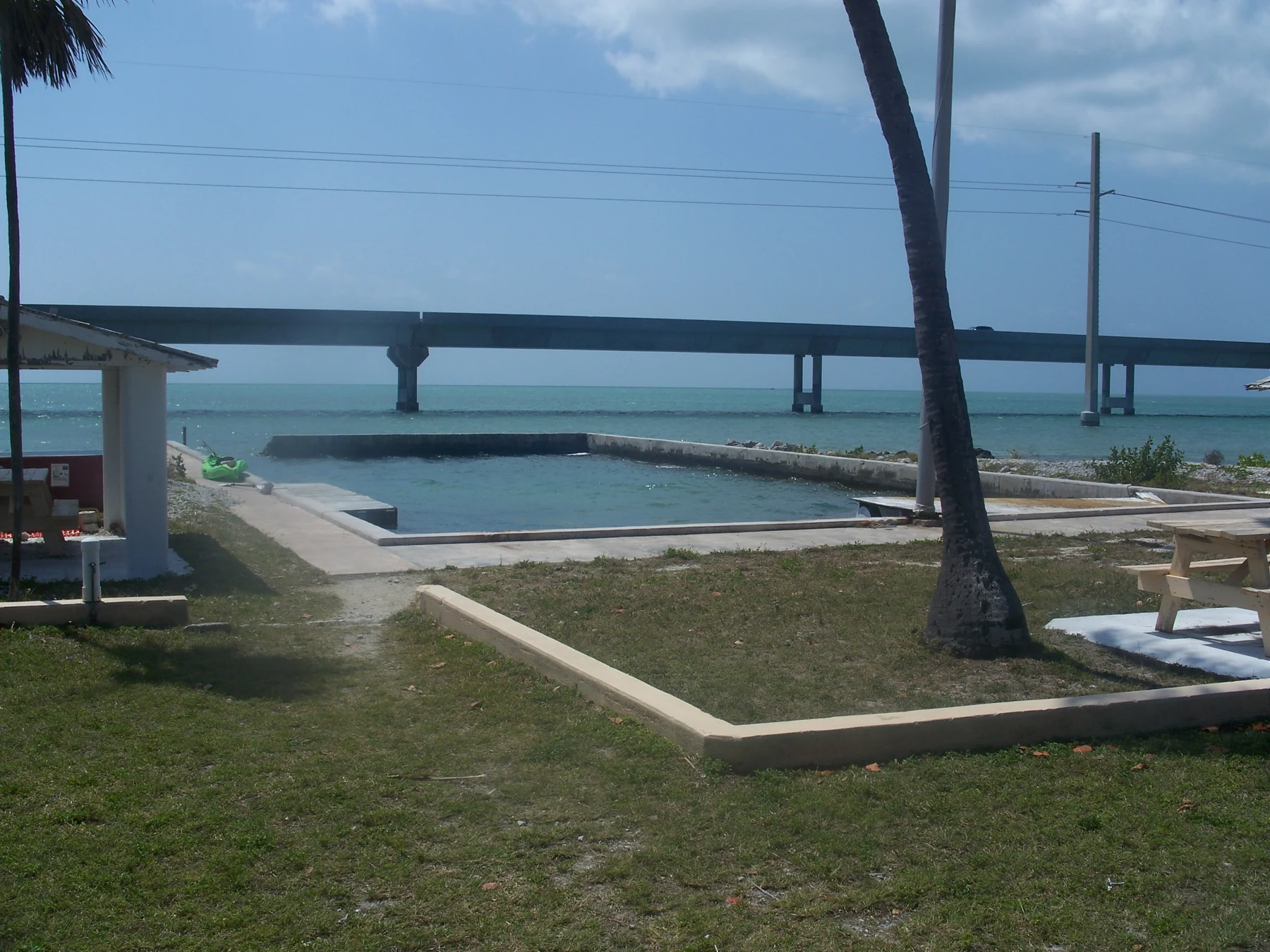

Give the museum and buildings time to explain the landscape
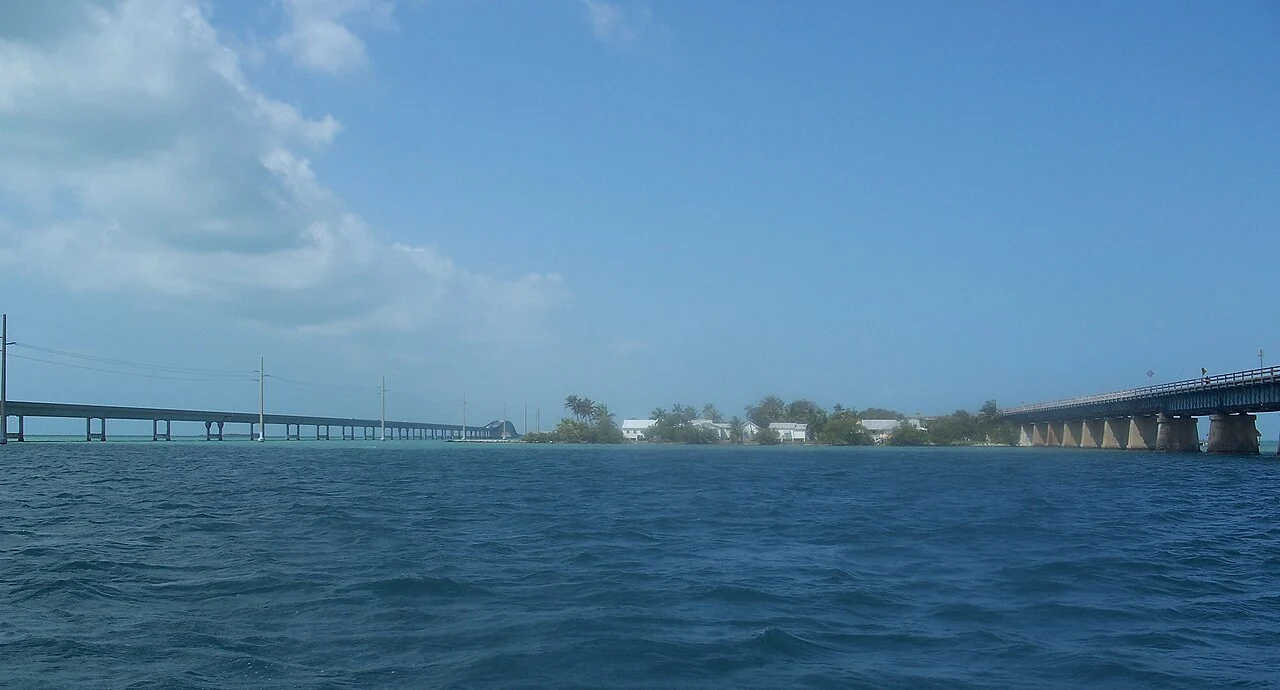
Begin by identifying the old bridge, the island and the modern highway in relation to one another. From a car, the island can seem like a small detail beside a major road. On foot, the scale changes: the buildings, approaches and spaces between them make it easier to imagine a working community rather than simply an engineering landmark.
A guided visit is useful when you want help reading those details. A self-guided visit can suit someone who prefers to pause with an exhibit or photograph a building's exterior, provided the areas are open to visitors. In either case, treat signs and closed doors as boundaries. A preserved building may also have a present-day operational use, and an attractive porch is not automatically a public room.
A simple sequence is to take the historical orientation first, explore the permitted grounds second, and leave optional water-based activities until you have checked conditions and the return arrangements. This avoids spending the first part of the visit on photographs and then rushing through the reason the island exists. It also makes it easier to choose what to skip if the weather or your energy changes.
Construction camp, maintenance community, historic site
The operator's historical timeline places the island's construction-camp role in 1908 and its transition to a bridge-maintenance camp after the railroad's completion in 1912. A school followed in 1923. After the devastating 1935 hurricane, Pigeon Key supported rescue and relief work; the highway era then changed the purpose of the crossing. The new bridge bypassed the island in 1982.
That sequence explains why a visit should not stop at a single construction date. The island was a place where people lived after the dramatic task of building the railway had ended. Maintenance, transport, schooling and adaptation to storms are part of the same story. Ask how a building's use changed, not only when it was built.
Compare the island's modest scale with the long structure beside it. A small cluster of buildings helped support a much larger transport system. This is a useful theme for visitors interested in industrial history: the impressive object visible from afar depended on everyday work performed in places that are much easier to overlook.
Look closely at the Paint Foreman’s House
The Foundation's account of the Paint Foreman's House describes an especially revealing example. Built in 1908 as a kitchen, it became a house in 1912. The roof retains clues to its earlier use, including patches where kitchen stove stacks once passed through. The building's elevated supports also help explain adaptation to heat and high water.
It is worth making two different photographs from permitted areas: a wider frame showing the house in relation to the bridge, and a closer view of a visible architectural detail. The first explains setting; the second encourages observation. Do not infer interior access from a historic photograph or from the fact that a building appears on a tour map. Follow the current visitor route.
This kind of detail is more informative than a list of dates alone. A structure that began as a communal kitchen and later housed a family records a change in the island's function. The bridge was no longer only a project under construction; it had become a system that needed people living nearby to keep it working.
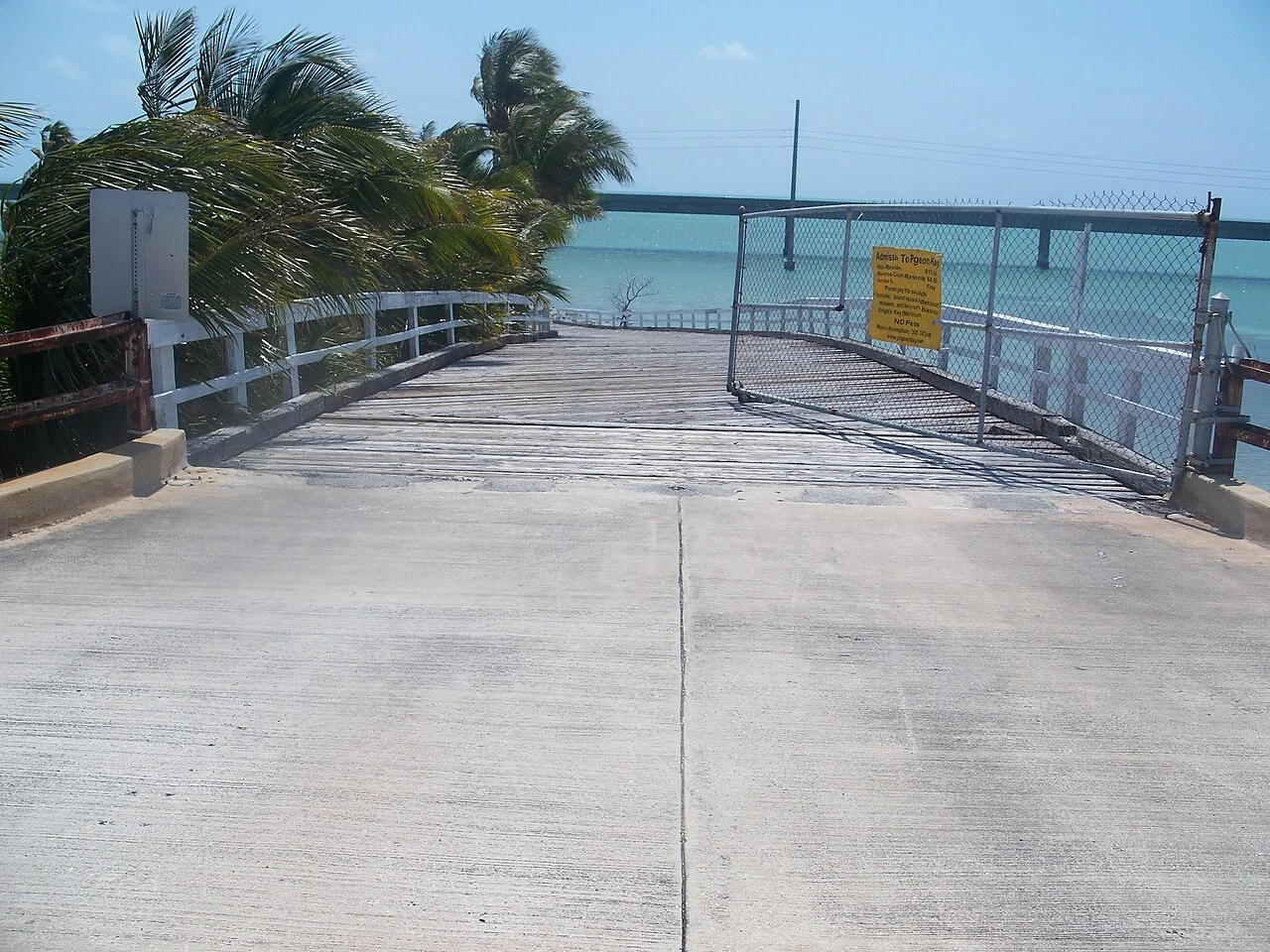

Check conditions and the island’s rules before adding an activity
The operator's FAQ allows visitors to bring their own snorkelling equipment and requires a dive flag. It warns that currents can be swift, and says equipment is not available to rent. Swimming and fishing in the saltwater pool are prohibited. These details make preparation important: a clear view of shallow water does not establish that conditions suit every visitor.
If you are uncertain about entering the water, ask staff about current conditions and the permitted area before doing so. The historic tour and a shore-based visit remain worthwhile without snorkelling. Never turn a paid admission ticket into an assumption that supervision, equipment, rescue services or a particular wildlife encounter are included.
The FAQ distinguishes catch-and-release fishing from the dock from other activities, and excludes pets from the island while allowing service dogs. If travelling with an animal, check the exact current policy before beginning the bridge walk. A rule applying to the public trail need not be the same as the island's rule.
Small preparations make the day easier
Bring what you need for sun, wind and the duration of your chosen outing. Secure hats and loose straps. If you intend to take photographs, a charged phone and a small cloth for salty spray may be more useful than carrying a large kit that makes the walk uncomfortable. Protect valuables appropriately if water activities are part of your plan.
A picnic can be a pleasant way to use time between a tour and a return departure, but confirm the available facilities and take your waste away responsibly. The operator's tour page says alcohol is not permitted. Do not feed wildlife, leave scraps or assume that historic grounds function like an unrestricted beach park.
Before leaving Marathon, confirm the return plan with every member of the group. If some walk and others ride, agree where they will meet and what happens if a plan changes. A small island may be easy to recognise on a map, but transport arrangements still need to be explicit.

Use the island’s official live view
The Foundation provides an official Pigeon Key webcam. It is a useful way to get a feel for the setting before travelling. A video feed is not a substitute for weather advice, a closure notice or confirmation that a tour will operate; a camera may be delayed, offline or pointed away from a local problem.
Historical photographs on this page serve a different purpose. Their dates make them useful for comparison, not for proving current facilities. Look at how the bridge relates to the buildings and shore, then use the operator's current pages to plan what you can do during your visit. Continue with our arrival guide or the Old Seven walking guide according to how you intend to reach the island.
Questions that make a guided tour more rewarding
A tour becomes more interesting when you arrive with a few questions rather than only a camera. Ask which buildings retain their original use and which were adapted after the railway was completed. Ask how supplies reached the island and what work continued after construction ended. These questions connect the visible place to everyday life without needing to memorise a long chronology beforehand.
It is also useful to ask what is original, what has been repaired and what a historical photograph can and cannot establish. A restored building is not necessarily unchanged since its first construction. That does not make it less meaningful; it gives you a more accurate way to understand preservation. Repairs, storms and changes in use are part of the story of a working place.
For a family visit, give each person a different observation to make: a building detail, an example of transport, or a clue to how people kept cool. Compare those observations afterwards. This gives children a concrete task without turning the visit into a test. It also creates a more varied photo record than asking everyone to take the same picture of the bridge.
The Kyle family and the maintenance years
The Foundation's account of the Kyle family describes island life between 1912 and 1933. Family members were involved in the school and bridge-related work; daily trains brought supplies such as food, ice and newspapers. This is a useful counterweight to the idea of Pigeon Key as merely an isolated construction camp.
Transport infrastructure changes daily life as well as geography. Once trains were running, the island could be both a workplace and a home linked to other communities. Looking at a residence or a classroom with that in mind makes ordinary spaces as significant as the steelwork overhead. The maintenance community is a different chapter from the original building campaign, not a footnote to it.
When comparing accounts, distinguish a documented family story from a general impression about everyone who lived here. Avoid filling gaps with invented dialogue or assumptions about what residents felt. A good historic visit can leave some questions open while still giving a clear picture of the work, movement and domestic life associated with the crossing.

A good visit does not require every available activity
It is tempting to combine a full bridge walk, guided tour, museum visit, picnic, snorkel and lengthy photography session. That may be more than fits comfortably between your arrival and planned return. Choose the one or two activities that matter most, then treat the others as optional. This is especially helpful when travelling with people who have different interests or energy levels.
If the historical tour is the priority, protect time for it rather than arriving tired and rushed after a long walk. If the walk is the priority, you can appreciate the island's setting without committing to every activity offered there. If someone does not want to enter the water, there is no need to make snorkelling the shared centre of the visit.
Before leaving, check that everyone knows the return arrangement and has their belongings. A last photograph can wait if it risks missing an agreed departure. Keeping a modest amount of spare time produces a more relaxed ending than trying to squeeze one more activity into the final minutes. The memory of the visit should be the place itself, not a scramble to get back.
Four questions to settle with the operator
Confirm which admission type you need, where you must check in, what return transport is included, and whether any specific requirement in your group needs advance arrangement. Keep the answer with the booking confirmation. These four questions are more useful than assuming that every tour description includes the same transport and facilities.
If a booking page and an older travel article disagree, use the operator's current confirmation. This independent guide provides context and source links; it does not sell tickets, reserve places or guarantee departures.